- The Murderbot Diaries by Martha Wells
- A Psalm for the Wild-Built by Becky Chambers
- On A Sunbeam by Tillie Walden
- The Left Hand of Darkness by Ursula K. Le Guin
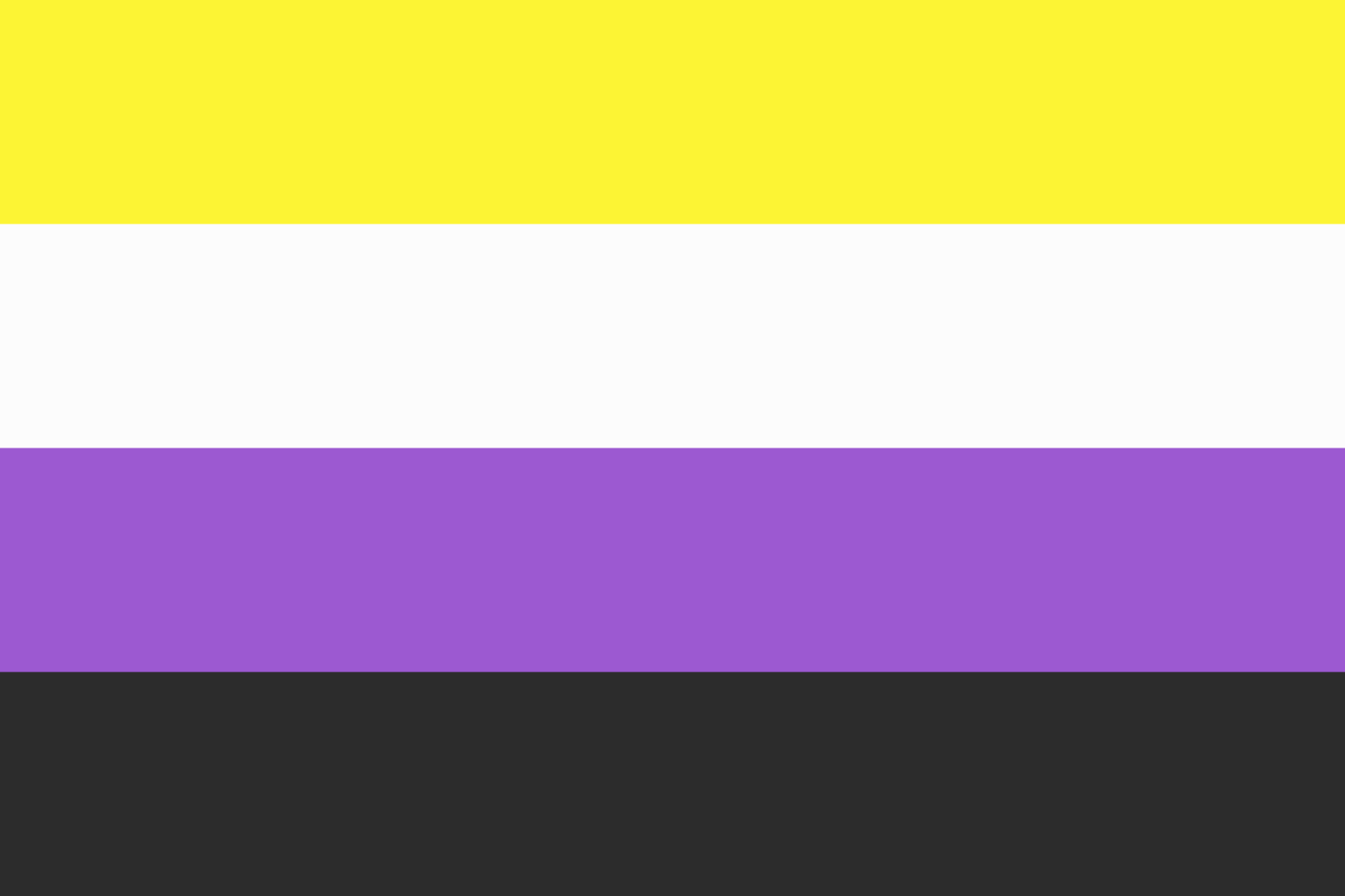
Today is Trans Day of Visibility! As a recently “out” enby (nonbinary person), I wanted to share a few works of science fiction that speak to some aspect of my experience with gender. For clarity, some (not all) nonbinary people identify as Trans. This is often because their nonbinary gender identity is different from the one they were assigned at birth, and are therefore not cisgender. I’m still navigating what this means in the context of my own identity, but suffice it to say: nonbinary people can fall under the Trans Umbrella.
Science fiction has a rich history of exploring ideas that are taboo to discuss outside the realm of fiction. It’s been fertile ground for the discussion of QUILTBAG issues for decades bacause of the genre’s commitment to questions of difference: what are different worlds like? What are different kinds of humans like? What makes us human? The honest interrogation and radical theorizing that happens on pulpy pages has been invaluable to the public perception of gender-nonconforming (GNC) individuals (and other societal “others”).
A few important notes before we dive in: lots of nonbinary people dislike the fact that we’re most frequently depicted as robots and aliens. I see where they’re coming from. Real-world nonbinary people are living, breathing humans, not abstract thought experiments on fictional planets. In all of these books, it’s important to remember that the characters live in societies that are significantly different from our own (and often more tolerant). I’ll discuss the strengths and limitations of the nonbinary representation in each book.
Comment your favorites that I’ve missed!
The Murderbot Diaries

The Murderbot Diaries by Martha Wells was one of my first literary exposures to a GNC protagonist. Murderbot is a construct– a cyborg-type entity that’s a patchwork of organic tissue, mechanical parts, and an AI mind. Murderbot is genderless and uses the provocative “it/its” pronouns, as it was designed to be a piece of security equipment and treated as an object by most humans (like other bots and constructs in this universe). Murderbot wasn’t designed to be sentient, but it is.
“As a heartless killing machine, I was a terrible failure.”
All Systems Red, The Murderbot Diaries #1
After hacking its own governor module (the part of its brain that punishes it for bad behavior), Murderbot spends as many of its waking hours as possible watching tv shows and movies from the entertainment feed. It is incredibly introverted, and begrudgingly capable at keeping its human clients alive. It’s fun seeing Murderbot ponder humanity, and how it’s glad it isn’t a human. It would be quite anthropocentric to assume Murderbot wants to be!
Gender isn’t at the forefront of this narrative. I like reading books where GNC people can live their lives and seeing story-worlds where their right to do so isn’t challenged– Murderbot’s right to exist relies on other factors. While gender is an important secondary theme, Murderbot’s experiences are hard to compare with those of real-world nonbinary people. Books like this are better for exploring the individual’s internal experiences of gender than their social experiences, though the social experiences do play a role.
A Psalm for the Wild-Built

A Psalm for the Wild-Built by Becky Chambers is, in my opinion, Murderbot’s cozy counterpart. This book is best described as Utopian Solarpunk.
The story takes place on a moon called Panga, which is home to a society that has trancended industrialism. After gaining sentience centuries ago, the robots designed for manufacturing left to live in the forest, apart from human society.
The nonbinary protagonist, Sibling Dex, is a tea monk. They travel the human-settled parts of the world providing comfort to its residents in the form of hot tea, conversation and comfortable silence. Dex’s world is turned upside-down by the arrival of a robot– the first since they all left– with one question: “What do people need?”
“You keep asking why your work is not enough, and I don’t know how to answer that, because it is enough to exist in the world and marvel at it. You don’t need to justify that, or earn it. You are allowed to just live.”
A Psalm for the Wild-Built, Monk & Robot #1
Much of sci-fi’s real world power comes from encouraging readers to look past what “is” and into what “could be.” Both Sibling Dex and the robot, Mosscap, are GNC by our Earthly standards. Mosscap is genderless in the same way that murderbot is, and Dex is nonbinary in a world that doesn’t default to the gender binary like ours. The idea that one can be nonbinary without encountering social challenges as a result is one that can be hard to imagine, and Chambers is able to show us what such a reality might look like. Chambers invests so much care and dedication in the worldbuilding that its inclusivity feels natural and effortless.
On A Sunbeam
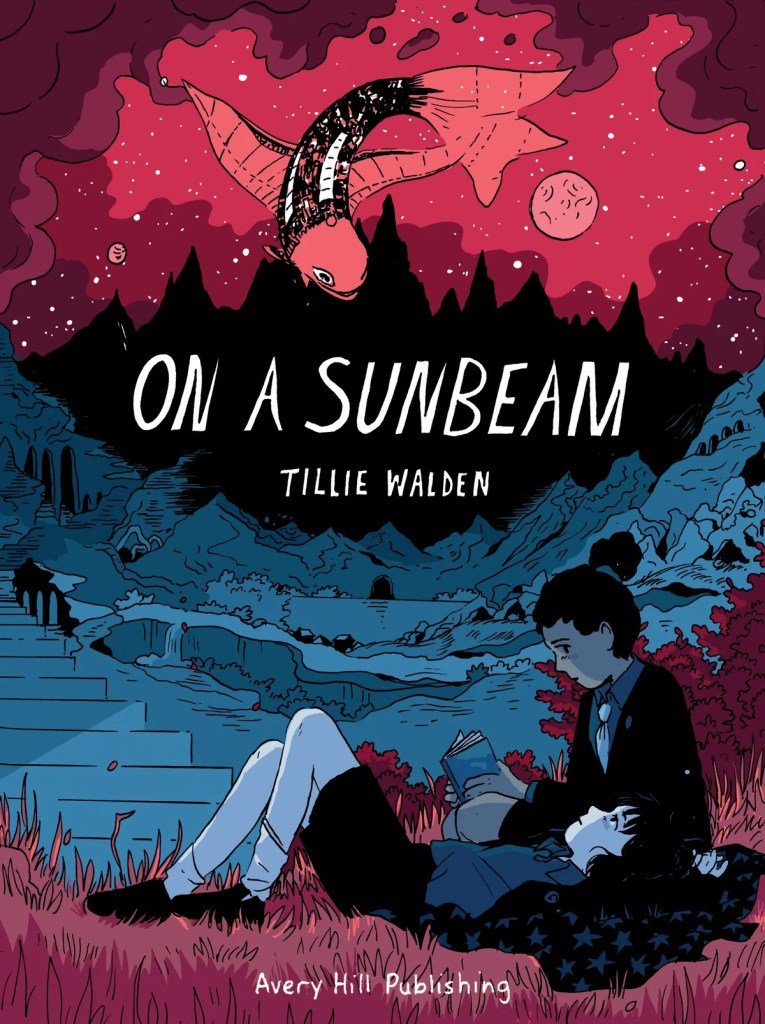
On A Sunbeam by Tillie Walden is a graphic novel and free web comic that features one nonbinary character and a cast of women. We follow the protagonist, Mia, as we see her past and present unfold in alternating chapters. It is a story about first love, sapphic romance, high-stakes space adventures, and found family. The art is gorgeous, too.
The nonbinary character, Ell, is a part of the construction crew that Mia joins at the beginning of the book. Ell is nonverbal and incredibly talented at their job– electronics and wiring on the construction projects. Over the course of the story, we gradually learn more about Ell. It is quite fun to see their backstory come together!
This book is the epitome of cozy sci-fi. It was nice to settle down with the print version of this book and Astronomy, Vol. 1 by Sleeping At Last every night that I read it. I was lucky enough to get it from my library!
The Left Hand of Darkness

The Left Hand of Darkness by Ursula K. Le Guin follows Genly Ai, a man from Earth, as he interacts with the residents of the planet Gethen. Gethenians are humans without gender– as Le Guin puts it, they’re “complete androgynes.” Written in 1969, this is a book that seems well ahead of its time. While imperfect, it is a staple of the LGBTQIA+ sci-fi canon– and for good reason.
“The Gethenians do not see one another as men or women. This is almost impossible for our imaginations to accept. After all, what is the first question we ask about a newborn baby?”
The Left Hand of Darkness, The Hainish Cycle
This book asks a few primary questions: what might a society without gender look like? How might a man from Earth interact with such a society? While these questions are present in the story, there is much more to explore beyond them. It is a story of political intrigue, wilderness survival, love and friendship. Throughout the book, the protagonist refers to all of the Gethenians by he/him pronouns. Le Guin made this chouce for a couple of reasons: Genly Ai is not a protagonist who is familiar with androgyny or gender-neutral pronouns. While narratively this makes sense, Le Guin has since said she would have used gender neutral pronouns if she had known better at the time (Is Gender Necessary? Redux (1976/1987)). In Ursula K. Le Guin: Conversations on Writing, a transcription of Le Guin’s interviews with David Naiman, she discusses further how the use of a gender neutral “he” excludes other gender identities from discourse.
It’s a slow-paced book, written in the same era of sci-fi as Dune, so it isn’t as accessible as the other works on this list. That said, Le Guin has become one of my favorite authors of all time. Her prose is beautiful, and has a graceful command over language like no other writer.
Since the societies in The Left Hand of Darkness have no concept of gender, its characters have wildly different experiences with gender than non-fictional enbies. The Left Hand of Darkness is part of The Hainish Cycle– it is a series that doesn’t need to be read in order.
To Be Read
There are plenty of books with nonbinary representation that I haven’t read yet! Please comment your favorites so I can check them out. Here’s my To Be Read list so far:
- Ancillary Justice Trilogy by Ann Leckie
- We Are Legion (We Are Bob) by Dennis E. Taylor
- Artifact Space by Miles Cameron
- I Wish You All The Best by Mason Deaver
- Tide Child Trilogy by R.J. Barker
 Sam D. Cote